Anaerobic MBR
AnMBR Series — Anaerobic Membrane Bioreactor
Anaerobic biology plus membrane separation for energy and nutrient recovery
Product description
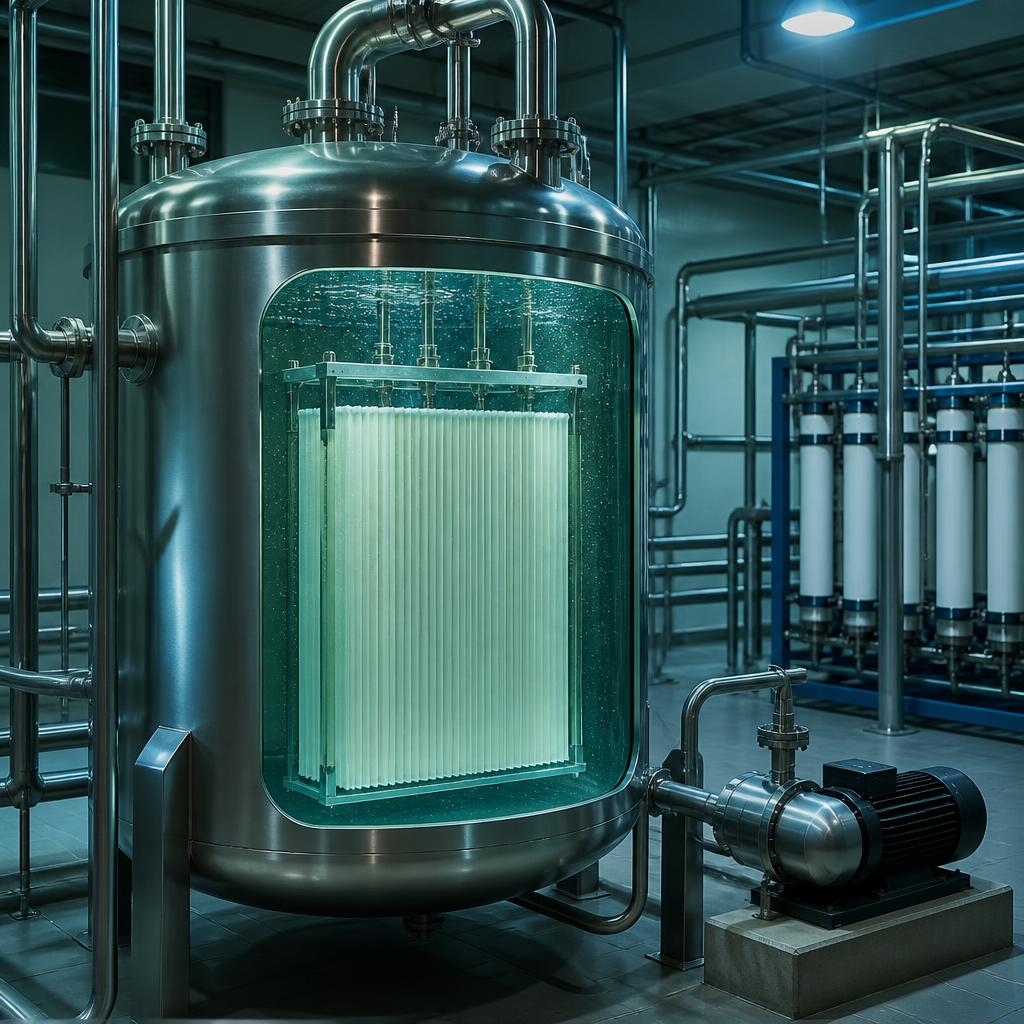
The Anaerobic Membrane Bioreactor (AnMBR) is a water treatment technology that combines membrane separation with an anaerobic biological treatment unit. It retains the core advantages of anaerobic treatment — low investment, low energy consumption, recoverable biogas energy, high organic loading rate, low sludge production and resistance to shock loads — while the membrane module adds complete biomass retention, a superior biochemical effect and consistently stable effluent quality.
In short, AnMBR is an economical and reliable route to reduced energy consumption and energy recovery while simultaneously minimising sludge generation — giving it broad application prospects in high-strength industrial and municipal wastewater treatment.
The AnMBR process is divided into two stages: anaerobic digestion and membrane separation. The anaerobic digestion stage is identical to a conventional anaerobic treatment process. The key difference in the membrane separation stage, compared with an aerobic MBR, is that aeration is not used to scour the membrane surface. Depending on the placement of the membrane module, systems are classified as separate (side-stream) type or submerged type.
The main factor governing membrane separation performance and stable long-term operation is membrane fouling. Fouling is driven by inlet water conditions, operating conditions, membrane materials, sludge characteristics, microbial metabolites and reactor configuration — all of which are addressed in SV-NanoMetrix module selection and hydraulic design.
Treated effluent is rich in nitrogen and phosphorus, making it suitable for nutrient recovery and agricultural irrigation reuse, while the captured methane-rich biogas offsets plant energy demand.
Specifications
| Configuration | Membrane arrangement | Description |
|---|---|---|
| AnMBR (MF Column) | Separate / side-stream | External microfiltration column with recirculation from the anaerobic tank — suited to high-solids and high-strength feeds with independent membrane cleaning. |
| AnMBR (Submersible MF) — single tank | Submerged | Submersible PTFE/Teflon MBR module installed directly in the anaerobic tank with permeate pump and blower — compact footprint and minimal pumping. |
| AnMBR (Submersible MF) — two tank | Submerged, separate membrane tank | Anaerobic tank plus a dedicated AnMBR membrane tank with submersible Teflon MBR, permeate pump, blower and recirculation pump — decouples biology from membrane operation. |
Configuration selection depends on feed COD, solids content, temperature and available footprint. Contact SV-NanoMetrix engineering for duty-specific sizing.
Performance figures are nominal values obtained under the standard test conditions stated with each table. Actual performance varies with feedwater chemistry, pretreatment, flux, recovery, temperature, pressure and operating practice. Individual element flow may vary from the nominal value. Specifications are subject to change without notice — request the current datasheet before specifying.
Typical applications
- High-strength industrial wastewater with recoverable organic load
- Domestic and municipal wastewater with energy and nutrient recovery
- Food, beverage, distillery and starch effluents
- Biogas generation and energy recovery from process effluent
- Nutrient (N and P) recovery and agricultural irrigation reuse
- Sludge minimisation projects replacing conventional aerobic treatment
Notes
- Membrane fouling is the primary factor affecting separation performance and stable operation
- Fouling drivers include inlet water conditions, operating conditions, membrane material, sludge characteristics, microbial metabolites and reactor configuration
- Unlike aerobic MBR, aeration is not used to scour the membrane surface in the anaerobic separation stage
Need a datasheet or pilot support?
Share your feedwater analysis and target recovery — our engineers will recommend the right element and array configuration.